
Isolated low-voltage & IEPE data acquisition with our new TRION3-24xx ACC/LV modules
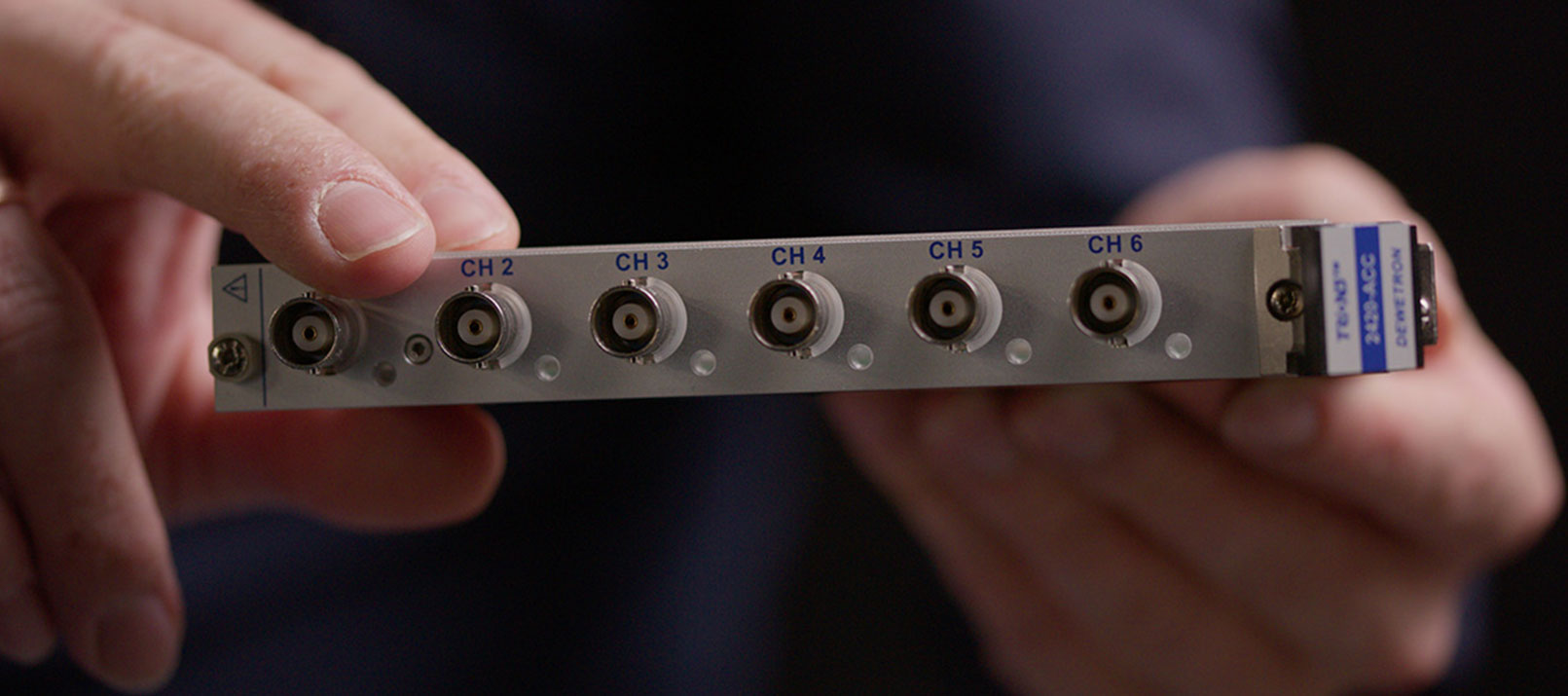
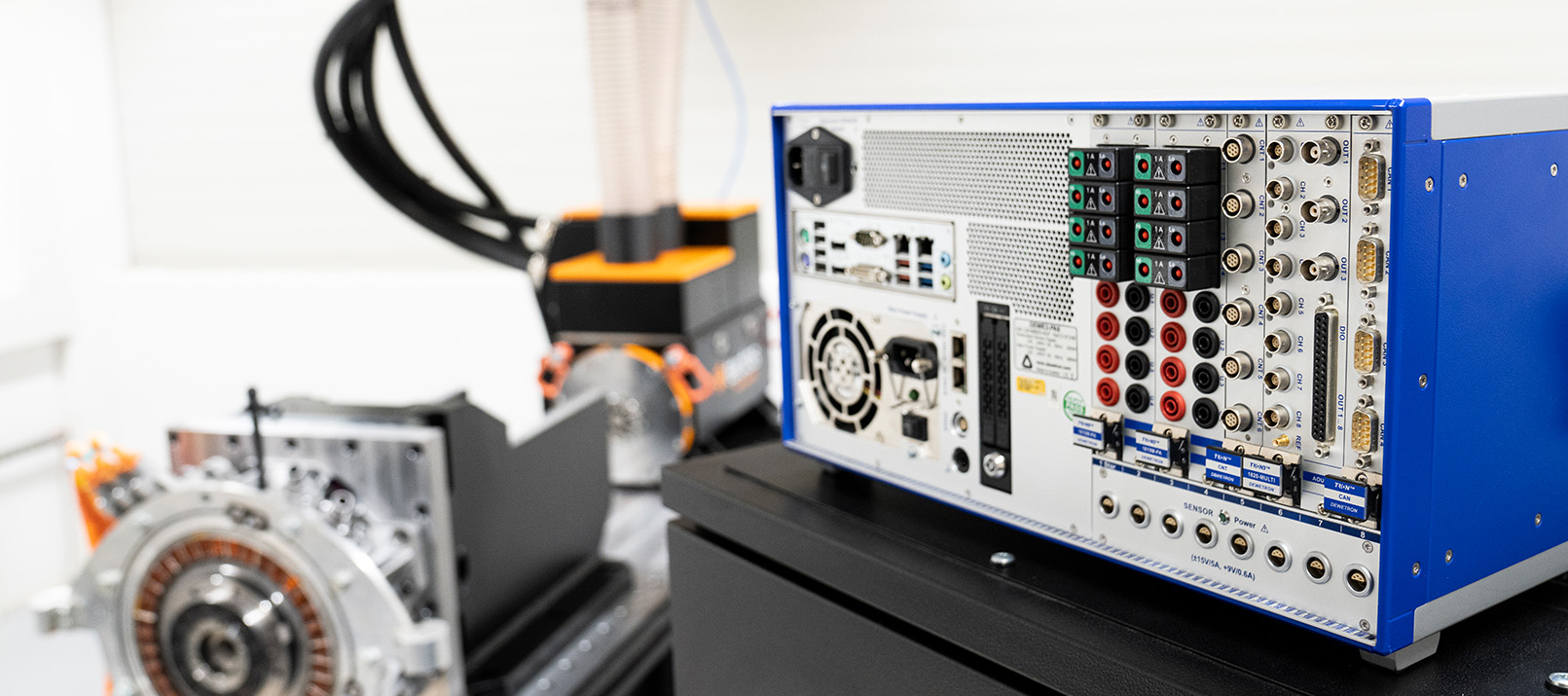
With the new TRION3-24xx-ACC and TRION3-24xx-LV, we expand our TRION3 portfolio with two powerful module-series for isolated IEPE and low-voltage measurements. The new LV and IEPE modules introduce enhanced filtering, an improved noise floor, and extended flexibility – while remaining fully compatible with every DEWE3 chassis.
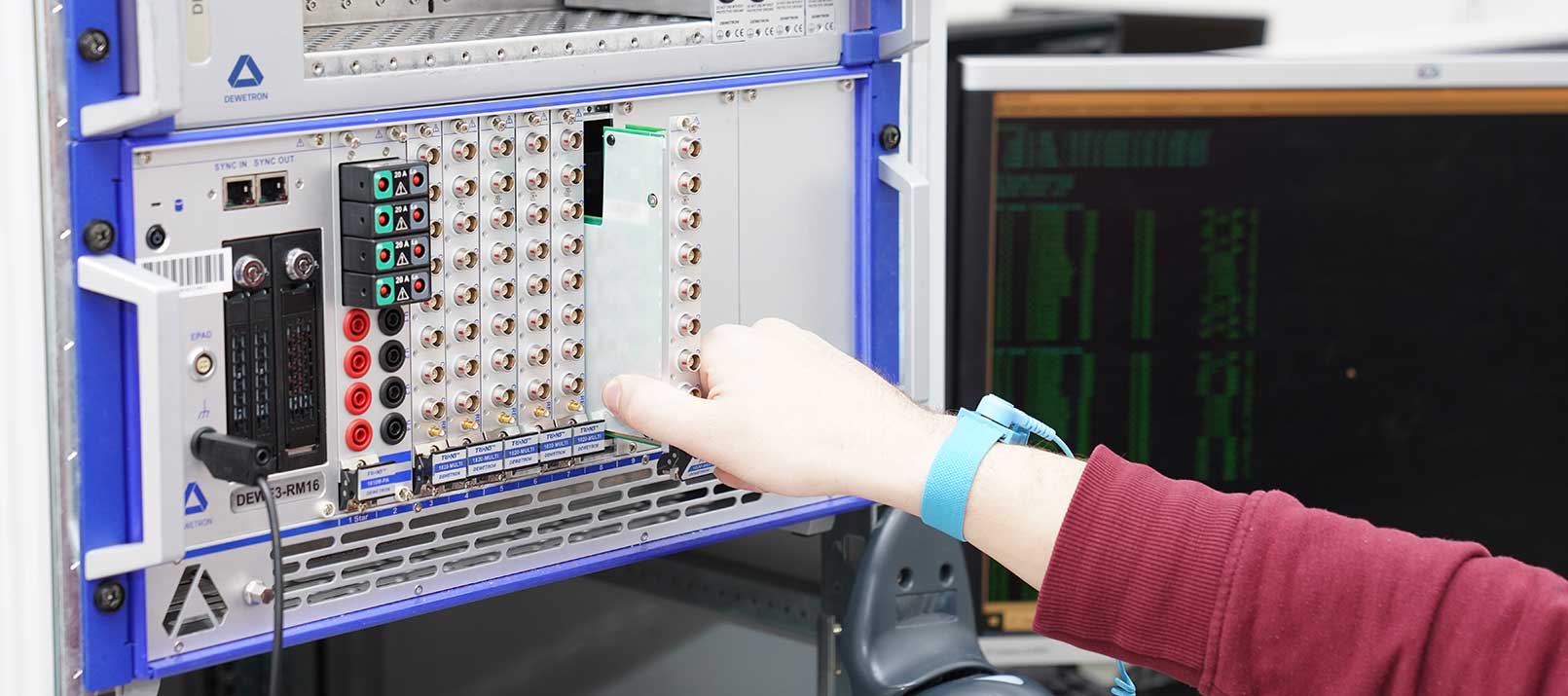
Simply plug the module into your DEWE3 system and it is automatically detected and configured. This plug-and-measure concept allows you to adapt your setup quickly, exchange modules easily, and scale your measurement system without complexity.
What are the TRION3-24xx-ACC/LV modules?
Both modules – the TRION3-24xx-ACC and TRION3-24xx-LV– feature six fully isolated analog input channels with BNC connectors. Each channel is equipped with its own 24-bit ADC, ensuring truly simultaneous and synchronous sampling across all inputs. With sample rates of up to 2 MS/s per channel, the modules are well-suited for both dynamic and high-frequency signal acquisition.
In addition to standard analog input functionality, channel 1 of every module can optionally be configured as a counter input. This counter mode enables:
- Event counting
- Pulse width measurement
- Frequency measurement
This makes the module suitable not only for analog signal acquisition but also for scenarios involving pulse-based signals.
Key Specifications
- Voltage input accuracy: ±0.02 % of reading ± 0.02 % of range ±20 µV
- Input impedance: 1 MΩ
- Overvoltage protection: ±300 VDC
- Isolation: ±1500 VPEAK (channel-to-channel & channel-to-chassis)
- Channel-to-channel phase mismatch: 10 ns
- Noise floor (typ.): < –160 dB
- IEPE excitation: 2 … 20 mA (ACC version)
- TEDS support: IEEE 1451.4 Class 1 (IEPE mode)
Distinctive System Architecture
The TRION3-24xx-ACC/LV modules are built around a refined signal chain architecture that combines advanced filtering with low-latency analog-to-digital conversion. The result is extremely low noise performance and excellent accuracy across a wide bandwidth.

Fig. 1: System architecture of TRION3-24xx-ACC/LV
At the heart of each channel is a dedicated 24-bit, 2 MS/s low-latency SAR ADC, which enables signal bandwidths of up to 1 MHz while maintaining an exceptionally low noise floor below –160 dB. Fig. 2 shows the clearly visible difference between our new TRION3-24xx-ACC/LV series and our legacy products.
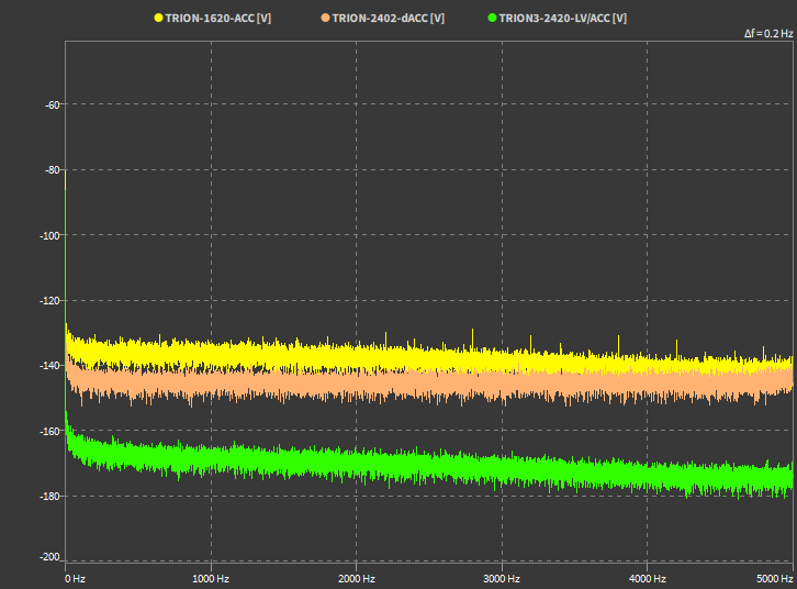
Fig. 2: Noise floor comparison for 5 V range at 10 kS/s
Optimized Filtering Concept
To ensure maximum signal integrity, the TRION3-24xx-ACC/LV modules use a combination of analog and digital filtering stages. First, a programmable analog filter is applied prior to analog-to-digital conversion. This stage reduces aliasing components directly at the analog front end and protects the ADC from unwanted high-frequency signal content.
After digitization, the modules provide an optional advanced anti-aliasing filter (AAF). This digital FIR filter is significantly steeper than the one used in previous generations -approximately four times sharper. The filter’s passband ends at 0.4 × the selected sample rate, ensuring 90 dB attenuation at the Nyquist frequency. This results in excellent suppression of aliasing artifacts without compromising usable bandwidth. Fig. 3 shows the transfer function of the advanced AAF at 100 kS/s compared to the legacy implementation.
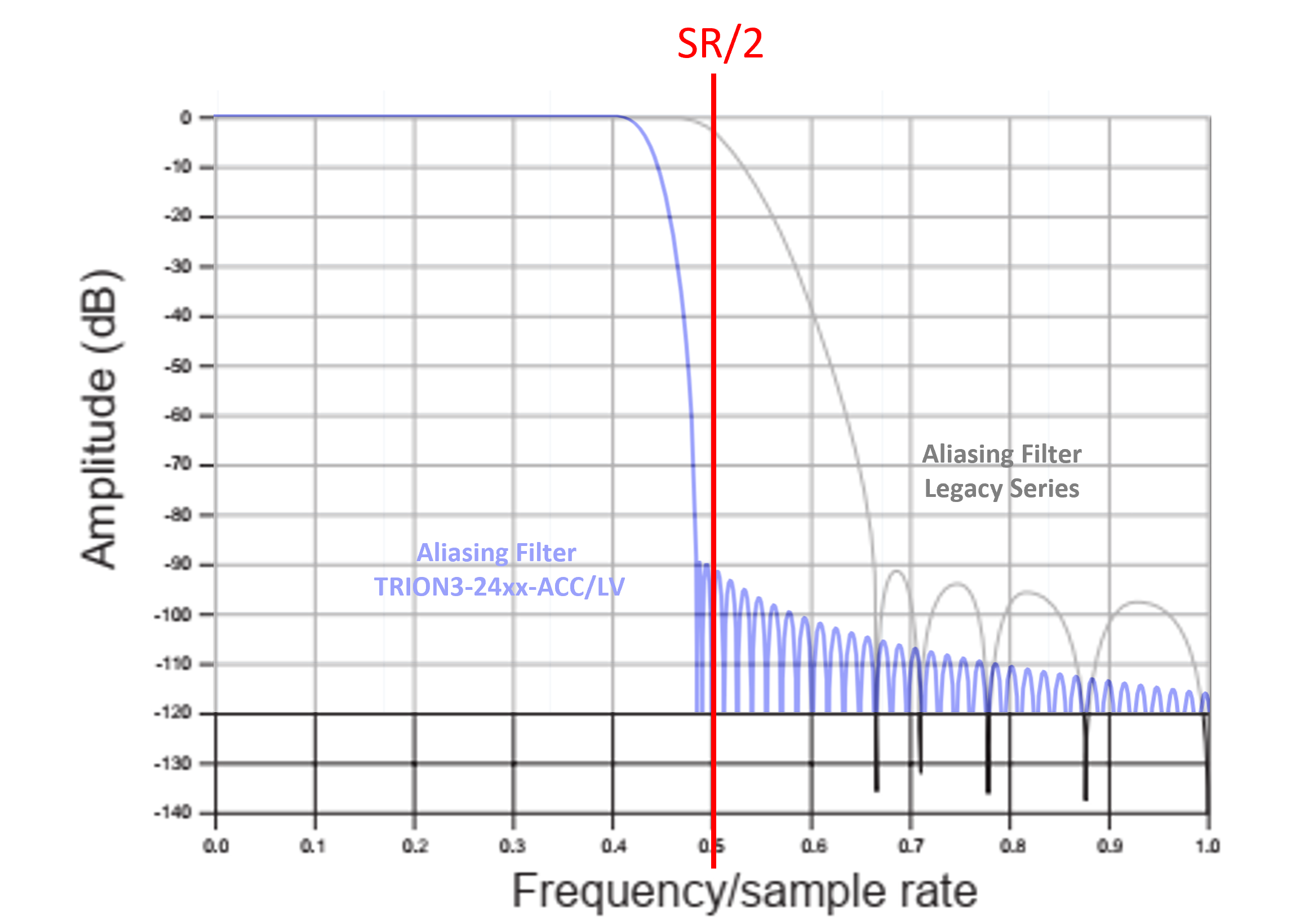
Fig. 3: Transfer function comparison of anti-aliasing filter at 100 kS/s
In addition to the FIR-based AAF, users can activate an optional programmable IIR low-pass filter. This filter can be configured as either Bessel or Butterworth characteristic with up to the 10th order, allowing users to optimize phase linearity or amplitude response depending on application requirements.
Flexible Configuration in OXYGEN
Both digital filters – the advanced AAF and the optional IIR low-pass filter – can be individually activated, deactivated, and configured directly in OXYGEN. Furthermore, any delay introduced by digital filtering can be compensated within the measurement software. This ensures precise time alignment across channels, even in complex multi-channel setups.
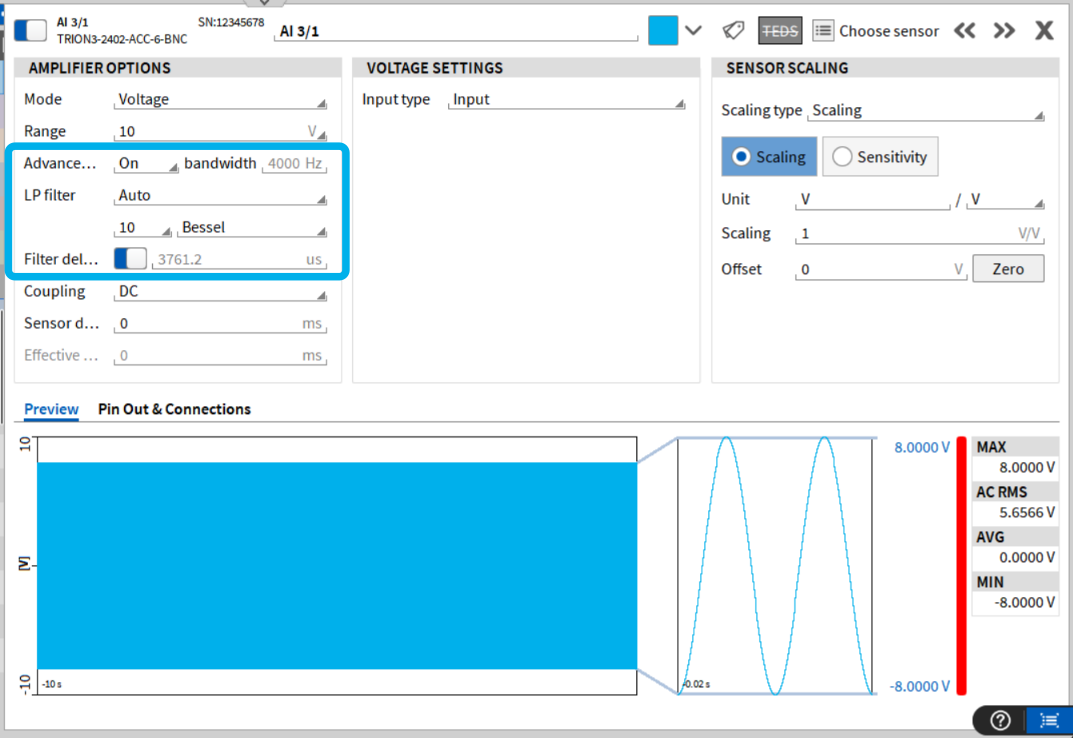
Fig. 4: Configuration of channel-specific digital filters within OXYGEN
Sensor Fault Detection
Our new modules further feature integrated automatic sensor fault detection to ensure reliable operation and immediate status visibility. Each input channel is equipped with a dedicated LED indicator, reflecting the current status of the connected sensor or input signal.
| IEPE mode | Voltage mode | |
| LED off | No sensor detected or broken | – |
| LED green | Sensor in normal condition | Input signal within range |
| LED orange | Input overload detected | Input overload detected |
| LED red | Short circuit on sensor detected | – |
Tab 1: LED modes
This immediate visual feedback simplifies troubleshooting during setup and operation and allows for quick diagnostics directly at the hardware level. In addition to the hardware indication, the sensor status is also available in OXYGEN as dedicated status channels. These can be logged, monitored, or visualized using various instruments within the software.
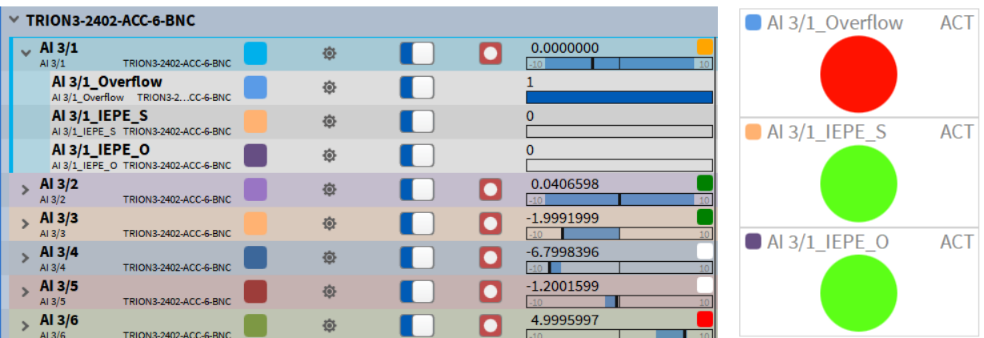
Fig. 5: Representation options of sensor fault detection in OXYGEN; left: channel list preview; right: example visualization with Indicator instrument
Built-In Self-Test
Like other TRION3 analog modules, the TRION3-24xx series includes a comprehensive built-in self-test routine designed to verify the complete functionality of the board. The self-test performs an advanced analog accuracy verification across all channels. Each input channel uses an integrated, highly precise internal DC reference source to validate every ADC range. During this process, gain and offset values are checked against specification limits to ensure compliance.
This automated procedure allows quick validation of the module without external calibration equipment. It is particularly valuable for quality assurance processes, system verification before critical measurements, and regular maintenance checks.
ACC vs. LV – What’s the Difference?
Both modules, TRION3-24xx-ACC and TRION3-24xx-LV, are based on the same system architecture, including ADC performance, filtering concept, isolation, etc. The difference lies in the optimization regarding the area of application:
- The TRION3-24xx-LV is optimized for precise low-voltage signal acquisition. It is ideally suited for applications involving conditioned signals or general high-accuracy voltage measurements.
- The TRION3-24xx-ACC, on the other hand, is specifically designed for IEPE-based sensors. While fully supporting all low-voltage measurement capabilities of the LV version, it extends the functionality with integrated programmable IEPE excitation (2 … 20 mA) and TEDS support (IEEE 1451.4 Class 1). This makes the ACC version ideally suited for dynamic measurements such as acceleration, force, pressure, and other vibration-related signals.
Available Variants
Both modules are available in multiple performance configurations to match a wide range of measurement requirements. Both versions can be selected with either a maximum sampling rate of 200 kS/s per channel (TRION3-2402-ACC/LV) or up to 2 MS/s per channel (TRION3-2420-ACC/LV).
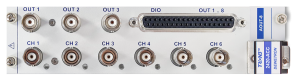
For applications requiring signal generation or closed-loop testing, the 2 MS/s variants can be extended with the TRION3-AOUT expansion. The corresponding versions (TRION3-2420-LV-AOUT-6-BNC and TRION3-2420-ACC-AOUT-6-BNC) integrate eight fully isolated analog output channels directly, which support signal ranges of ±10 V or ±30 mA.
| CHANNELS | SAMPLE RATE/CH. | RESOLUTION | ISOLATION | CONNECTOR TYPES | |||
| TRION3-2402-LV
|
   |
Datasheet | 6 | 200 kS/s | 24-bit | yes | BNC |
| TRION3-2402-ACC
|
 |
Datasheet | 6 | 200 kS/s | 24-bit | yes | BNC |
| TRION3-2420-LV
|
|
Datasheet | 6 | 2 MS/s | 24-bit | yes | BNC |
| TRION3-2420-ACC
|
|
Datasheet | 6 | 2 MS/s | 24-bit | yes | BNC |
| TRION3-2420-LV-AOUT
|
|
Datasheet | IN: 6
OUT: 8 |
IN: 2 MS/s
OUT: 2.5 MS/s |
IN: 24-bit
OUT: 16-bit |
IN: yes
OUT: yes |
IN: BNC
OUT: D-SUB, BNC |
| TRION3-2420-ACC-AOUT
|
 |
Datasheet | IN: 6
OUT: 8 |
IN: 2 MS/s
OUT: 2.5 MS/s |
IN: 24-bit
OUT: 16-bit |
IN: yes
OUT: yes |
IN: BNC
OUT: D-SUB, BNC |



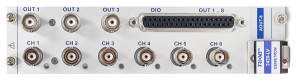
Compatibility: The high-speed DEWE3 systems support both, TRION3 and TRION modules. The DEWE2 systems only support TRION modules.
Here you find the overview of our DAQ systems.
In A Nutshell
With the TRION3-24xx-ACC/LV series, we expand our TRION3 portfolio with two high-performance modules for isolated IEPE and low-voltage data acquisition. Featuring six fully isolated channels, dedicated 24-bit ADCs per input, sampling rates up to 2 MS/s, and a noise floor below –160 dB, the modules deliver outstanding accuracy and dynamic performance. Integrated sensor fault detection, built-in self-test functionality, and full compatibility with all DEWE3 chassis ensure maximum reliability and flexibility. Thanks to the different variants and the optional TRION3-AOUT expansion, you can build a tailored mixed input-output system perfectly suited to your measurement environment.