
How to Integrate DEWETRON Measurement Systems into PROFINET Networks
Industrial test and automation systems require seamless communication between measurement equipment and PLC-based control systems. While measurement systems generate valuable data and calculated results, making this information available to the automation environment often requires additional interfaces or custom communication solutions.
With PROFINET support in OXYGEN, DEWETRON’s data acquisition systems can be integrated directly into existing Industrial Ethernet networks. This enables selected measurement values and calculated results to be transferred to a PLC, creating a standardized bridge between data acquisition and automation. In this article, we explain the fundamentals of PROFINET and show how to configure PROFINET communication in OXYGEN.
What is PROFINET?
PROFINET (Process Field Network) is an open Industrial Ethernet standard designed for communication in automation environments. Developed and maintained by PROFIBUS & PROFINET International (PI), it allows fast and reliable data exchange between automation components such as PLCs, controllers, I/O devices, drives, and measurement systems.
While PROFINET is based on standard Ethernet technology, it adds mechanisms specifically designed to meet the timing requirements of industrial applications. It supports real-time communication for cyclic process data while allowing standard Ethernet and TCP/IP communication to coexist on the same network. Depending on the application, PROFINET can therefore support anything from general factory automation to highly time-critical and synchronized processes.
How does PROFINET work?
A PROFINET network distinguishes between different device types according to their role within the automation system:
- IO-Controller: Typically a PLC or automation controller that runs the control program and exchanges process data with connected devices.
- IO-Device: A field device connected to the IO-Controller, such as an I/O module, drive, sensor, or measurement system. It provides input data to the controller and receives output data from it.
- IO-Supervisor: Usually an engineering PC, programming device, or HMI used for configuration, commissioning, and diagnostics.
During operation, IO-Controllers and IO-Devices exchange process data cyclically. In addition, PROFINET supports acyclic communication for tasks such as parameterization, configuration, diagnostics, and status information. This combination allows time-critical process values and less time-critical service information to be transferred over the same network.
Together, these components form a PROFINET IO system. At minimum, it consists of one IO-Controller and one or more IO-Devices, while IO-Supervisors can be connected when required for commissioning, configuration, or diagnostics.
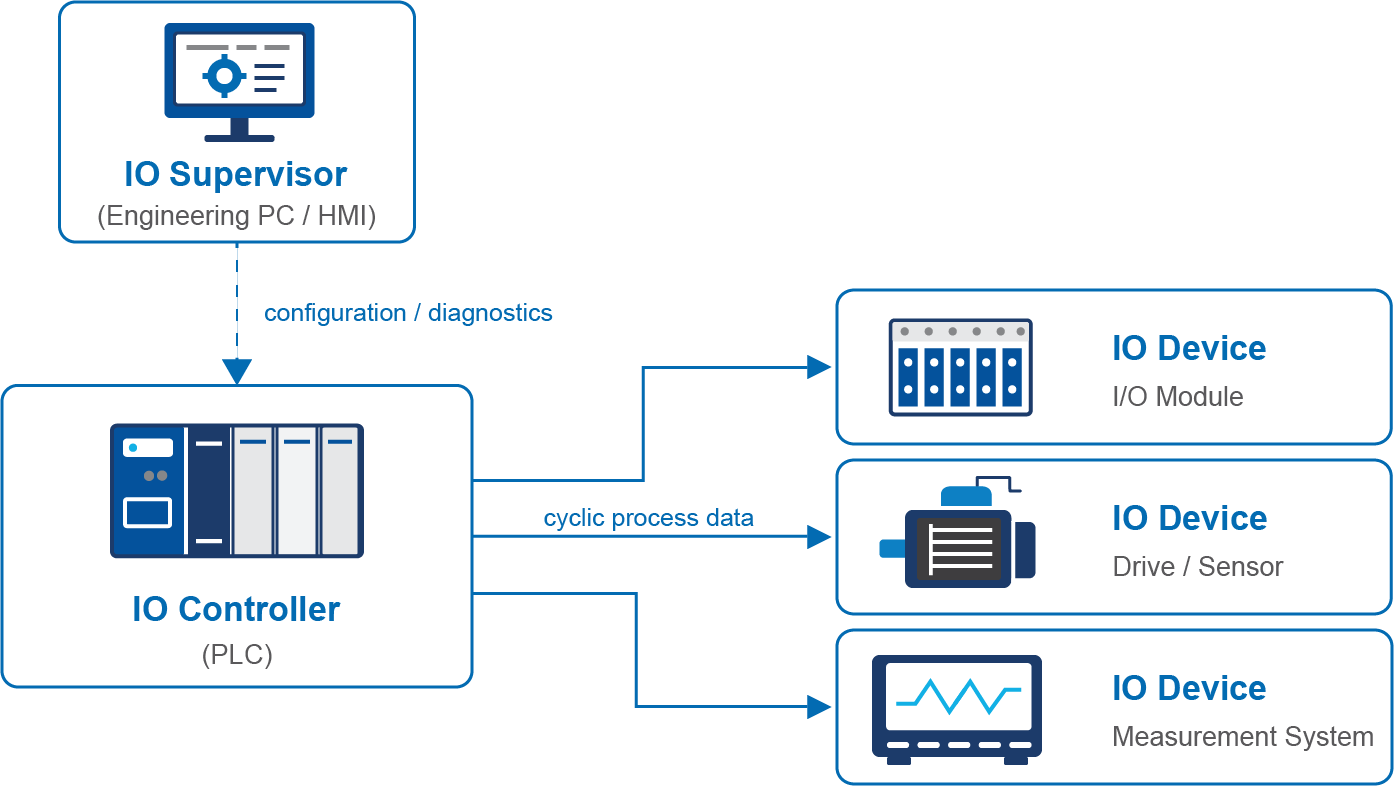
Fig. 1: Example of PROFINET IO system
Why use PROFINET for measurement systems?
In automated test environments, measurement systems and control systems often serve different purposes. While a data acquisition system records high-precision signals and performs advanced calculations, a PLC typically controls the test sequence, operates actuators, and reacts to defined process conditions.
To coordinate these tasks, relevant measurement information must be made available to the automation system. This can include directly acquired sensor data, calculated quantities, or status information. Without a suitable industrial communication interface, such data exchange may require additional gateways, dedicated hardware, or custom communication solutions.
PROFINET provides a standardized way to bridge measurement and automation. By integrating a measurement system directly into the PROFINET network, selected measurement and calculation results can be made available to the PLC as part of the automated test process.
Typical applications include:
- Automated Production and Assembly Lines – Automotive assembly lines, Robotic production cells, Automated manufacturing systems
- Energy and Power Monitoring – Generator testing, Converter testing, Substation monitoring
- Machine validation and commissioning
- End-of-Line Testing
- Hardware-in-the-Loop (HIL) systems
Example: Electric Motor Test Bench
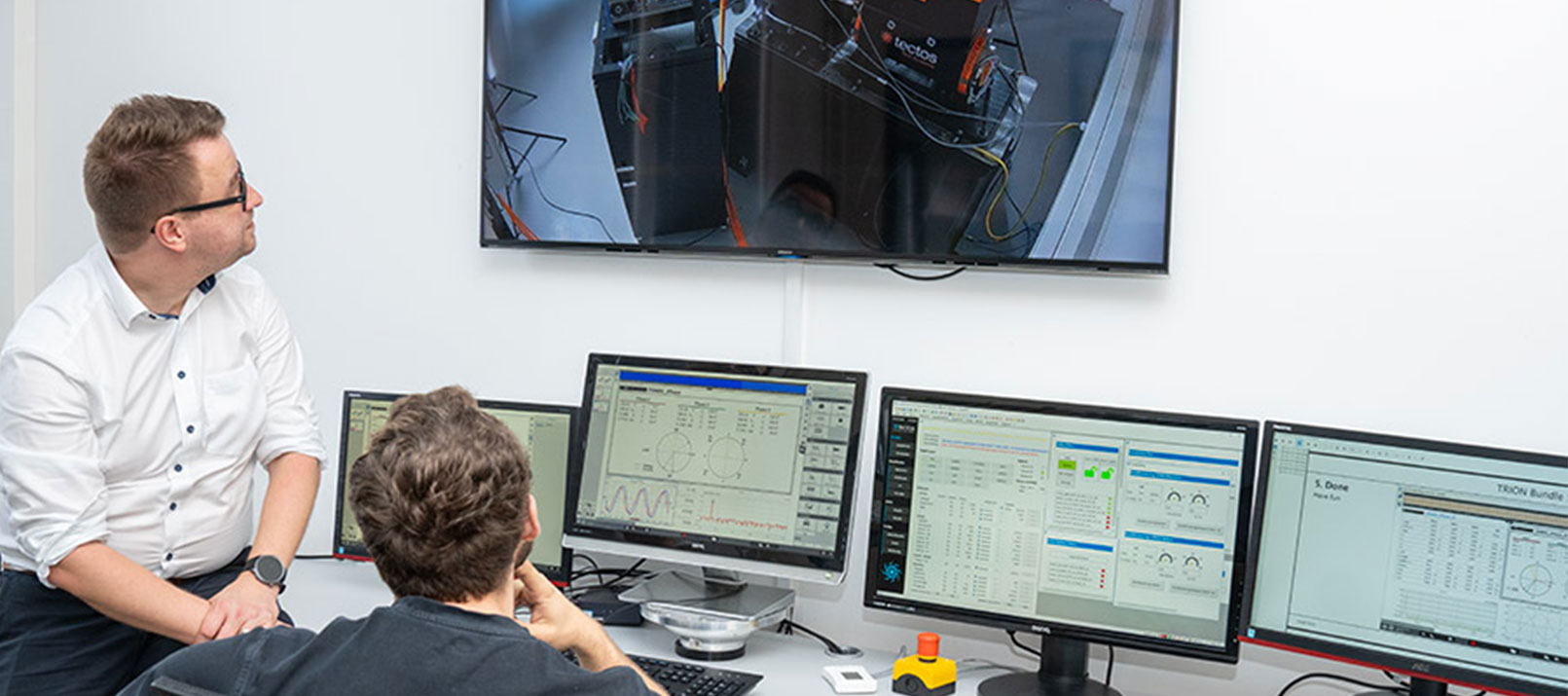
Consider an automated electric motor test bench. The PLC controls the test sequence and operating points, while a DEWETRON measurement system acquires voltage, current, torque, and speed signals. OXYGEN calculates parameters such as efficiencies, power factor, RMS values, or other derived quantities. Via PROFINET, selected results can be transmitted directly to the PLC and incorporated into the automated test workflow. This allows the automation system to react to measurement results, trigger actions based on test conditions, and execute fully automated validation procedures.
PROFINET Integration with DEWETRON’s OXYGEN
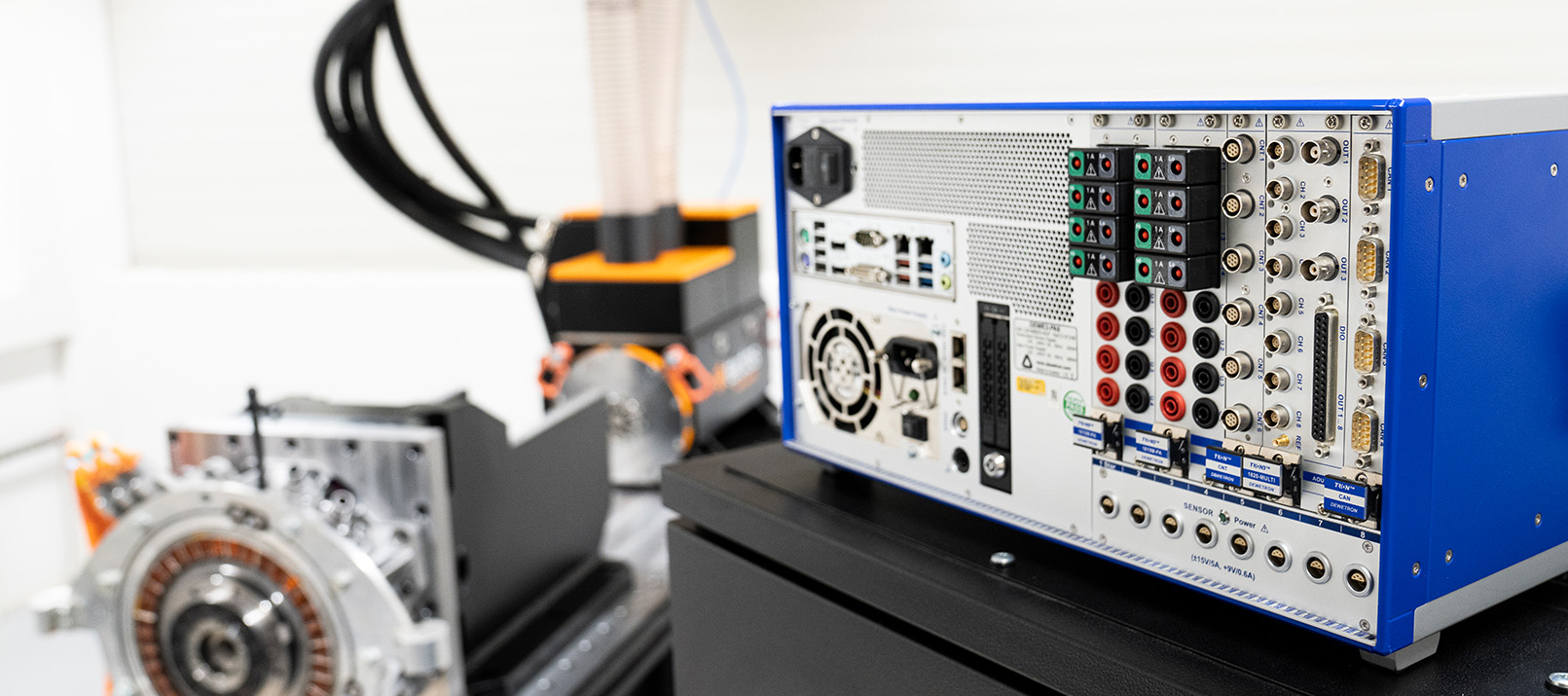
DEWETRON data acquisition systems equipped with the TRION-PROFINET-IO-DEVICE module can communicate directly with PLCs and automation controllers via PROFINET. In this setup, the measurement system operates as a PROFINET IO-Device and provides selected measurement data to the IO-Controller, typically a PLC.
Within OXYGENv, you can select up to 100 synchronous and asynchronous scalar channels for transmission via PROFINET. These channels may include both acquired measurement signals and calculated results generated within OXYGEN, such as formula channels. Data is transmitted at rates of up to 500 S/s, including the most recent acquired or calculated value together with its relative timestamp.
Configuration on the controller side is simplified through a dedicated GSDML file, which can be exported directly from OXYGEN. In addition, OXYGEN can generate a TAG file containing supplementary channel information to further simplify configuration within the controller environment. Together, these files enable straightforward integration of the DEWETRON measurement system into an existing PROFINET network.
Quick Guide: Setting Up PROFINET in OXYGEN
- Ensure that the TRION-PROFINET-IO-DEVICE module is installed and detected correctly.
- Open the Server tab and add a new PROFINET instance.
- Configure the desired update rate and select the measurement channels to be transmitted.
- Export the GSDML file and, optionally, the TAG file, and import them into the controller configuration environment.
- Press the Play button to start the data transfer.
To simplify commissioning and diagnostics, OXYGEN also provides real-time status information for the Application, Bus, and Error states, which can be refreshed at any time.
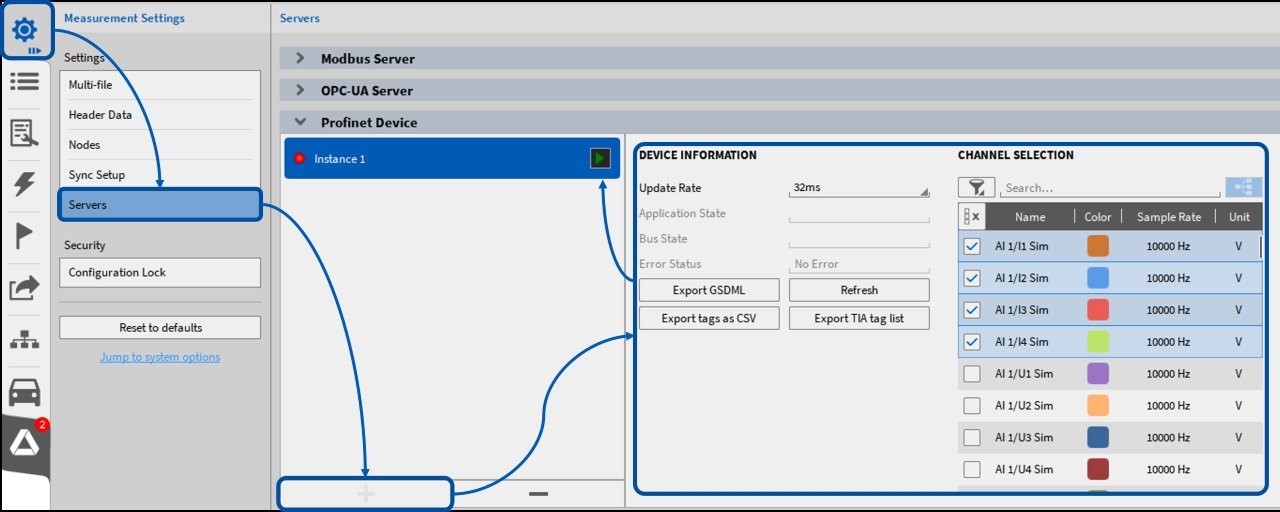
Fig. 2: Setting up PROFINET within OXYGEN
Conclusion
PROFINET provides a standardized and reliable way to integrate measurement systems into industrial automation environments. With native PROFINET support, DEWETRON’s OXYGEN measurement software enables seamless communication between data acquisition systems and PLCs, allowing engineers to transfer measurement data directly into automated processes. This simplifies system integration and helps accelerate testing, validation, and industrial automation workflows.